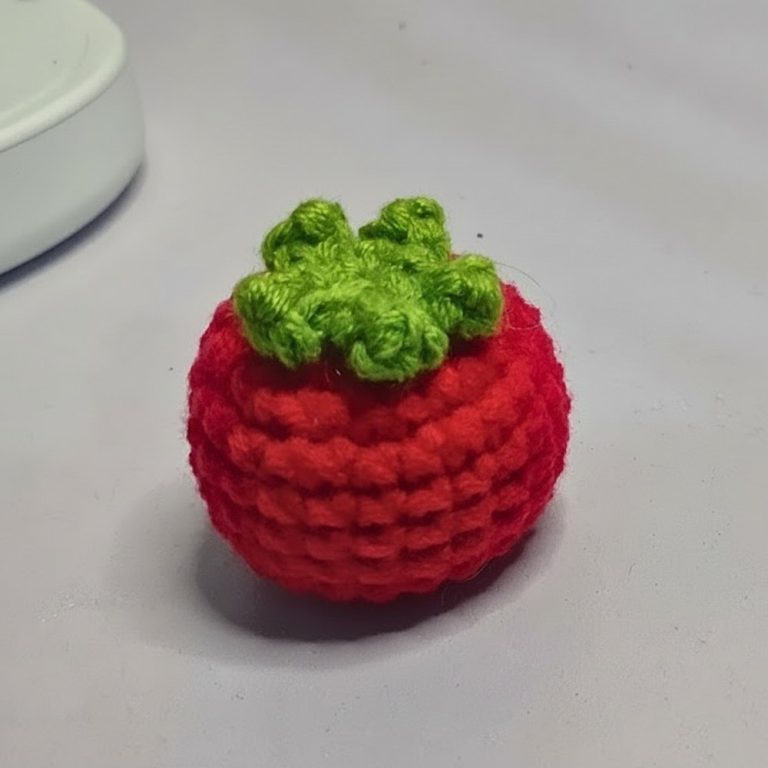
Sprout cuteness with this adorable Crochet Baby Carrot Pattern bringing soft texture, playful charm, and delightful character to life.
Eye-Catching Crochet Baby Carrot Pattern to Spark Creativity

A tiny sprout peeks out from the garden soil, its bright orange tip catching the morning light. That simple, cheerful sight inspired the creation of the “Crochet Baby Carrot” pattern, a charming little project that brings the joy of nature into your hands. This petite carrot features a plump, tapered body topped with leafy green stitches, crafted to capture the playful essence of the real vegetable. Made with soft, high-quality yarn and stuffed lightly for a firm yet squeezable feel, it is both visually appealing and tactilely satisfying.
Materials and Uses
- Yarn:
- Orange: For the carrot body.
- Green: For the leaves and “hair.”1
- Black/Dark Thread: For embroidering the facial features.
- Hook Size: Not explicitly stated, but standard small Amigurumi hook sizes (e.g., 2.0 mm or 2.5 mm) are typically used for this type of yarn and project.
- Tools: Tapestry needle, scissors, Fiberfill for stuffing (Bông gòn), and Hot Glue Gun (Keo nến) for secure assembly of small parts.
- Uses: A small, cute plush toy, keychain, or decorative item.

Beyond its whimsical appearance, this crochet carrot has versatile uses and lasting charm. It can serve as a playful toy, a decorative accent for a kitchen or nursery, or a thoughtful handmade gift. Its compact size makes it perfect for gift baskets, seasonal displays, or small, colorful décor accents. Durable materials and careful stitching ensure the carrot keeps its shape while remaining soft and approachable. The pattern stands out for its simplicity, elegance, and the delight it brings to both maker and recipient.

The pattern uses basic crochet stitches that are easy to follow, offering a relaxing yet rewarding crocheting experience suitable for beginners and experienced crocheters alike.


Level of Difficulty & Tutor’s Suggestions
Level of Difficulty: Beginner to Intermediate
The project relies on basic stitches (single crochet, slip stitch, chain, increase, decrease) but involves several steps, including working in rounds, switching to turning rows for the body section, and crocheting small, detailed components. The precise shaping and assembly require focus.
Tutor’s Suggestions
- Joining Rounds: The instructor consistently uses a slip stitch (mũi trượt) followed by a chain 1 (mũi Bính) at the end of each round to join and start the next. This creates a visible seam but ensures the piece is perfectly circular at the end of each round.
- Assembly: The use of a hot glue gun (keo nến) is recommended for attaching the face and small details (like the “hair”) for a strong, quick bond. The leaves, however, are attached by sewing (khâu).
- Closing the Piece: When closing the top (R30), the instructor advises sewing through only one edge (cạnh trong) of the remaining stitches and pulling tight, then tucking the yarn tail inside.
Special Features
- Segmented Body: The carrot is not a simple cone. It features an initial wide, round section and a segmented, narrower middle section worked in turning rows, which gives it a unique, realistic texture.
- Dimensional Leaves: The carrot includes two sizes of leaves (large and small) and three strands of “hair” to give the top a voluminous, fun appearance.
- Face Placement: The face is a separate, flat orange piece that is glued onto the large section of the carrot body before the body is fully closed, allowing for perfect positioning.
Step by Step Guide
This tutorial guides you through creating an adorable, segmented carrot plushie with a distinct, bulbous top, textured ridges, and leafy greens. The final product is a cute Amigurumi toy, perfect for beginners looking to practice basic shaping and joining techniques, resulting in a charming, collectible item.
Conclusion
This comprehensive tutorial results in a multi-textured, charming carrot plushie. By combining standard Amigurumi rounds, unique flat sections worked in turning rows, and a variety of small, decorative pieces, the project successfully elevates a simple cone into an expressive and cute toy, perfect for gifting or decorating.
Final Tip
To make your carrot’s side segments (R17–R24) look cleaner, use a contrasting color yarn (or just a long piece of the main yarn) and weave it horizontally along the edges of the turning rows after you finish and stuff the piece. This creates defined, faux-ribbed segments, giving the carrot a more polished and realistic texture.